
Snuffo, aka Benedikt Schmidt, has spent decades following artistic curiosity rather than trends. On November 6th, 2026, he returns with Poetic Gaze, his new album on his own Snuffo label. It is a ten-track record about slowing down, looking closer and finding beauty in the margins. These questions look at the ideas behind the album, the sound design, and the artist’s path so far.
I. Embrace the Arts: The Road Here
1. You began making music in the mid-1990s. How would you describe the distance between that first spark and the artist you are today?
It’s been a long ride from those early days to where I am today. And I’m still learning.
When I see young artists starting their careers today, I often wonder whether I should be happy for them that producing and releasing music has become so much easier, or whether I should wish them more time to explore, find themselves, and simply make music without the pressure.
As a teenager in the mid-90s, I took my very first steps into music production with some cheap software. Still, it was incredibly exciting.
It took until 2008 for my first vinyl record to come out (Snuff Crew – God / Straighter.) That’s when things started to get serious, with my first gigs and more releases to follow.
The tools have changed, and everything has become more professional, but the excitement and joy I felt in the 90s and 2000s are still very much alive.
The biggest difference between those early days and now is that I feel I’ve finally found my own niche and developed a sound that truly feels like mine.
At 45, I feel I’ve matured as an artist. I believe in what I do, even if that doesn’t mean all the insecurities have disappeared. I follow my own path, with all its ups and downs, and I’ve learned to embrace the journey for what it is.
2. The pandemic was a turning point in your work. What exactly did you reconsider at that time, and what did it change in your creative process?
I felt it was time for a creative reset, both as a producer and as a live act. My solo project, Snuffo, started in 2012, so in 2021 it seemed like the perfect moment to close the first chapter and move on to the next.
I felt I had told the stories I wanted to tell with my previous approach, and I was ready for new adventures.
So I made the switch from working in a DAW (REASON for production and ABLETON for live performances) to working with hardware. Partly because, by then, there were finally synths and grooveboxes on the market that I could afford and that didn’t require me to carry half a studio around.
I decided to record almost all of my tracks live with the machines, rather than building them on a screen. My sound became rawer, often faster, and definitely a more techno. It just felt right, and I knew straight away that I had made the right decision.
II. Classic Machine Funk, Abstract Textures
3. Your current sound mixes techno and electro with the raw energy of classic machine funk, now with more abstract textures. How did you balance driving rhythms and experimental ideas on Poetic Gaze?
The first time I brought club tracks and experimental soundscapes together as Snuffo was on my 2020 EP „Do You Believe In Rock’n Roll“ on New York Haunted. But it was last year’s album „Embrace The Arts“ that really gave me the confidence to experiment further with beats and textures.
With „Poetic Gaze“, I’m taking another step off the beaten path. It all happens quite intuitively when I’m working in the studio, following ideas and exploring sounds without knowing exactly where they’ll lead me.
4. You now perform live only with drum machines, synthesizers and samplers. How much of that setup shaped the album, and did the tracks start in the studio or from live jams?
Since I also work with hardware in the studio, I used two machines from my live setup for this album as well: the Elektron Model and the Sonic Potions x Erica Synths LXR-02.
I recorded all the tracks as live jams in the studio, using my Tascam Model 24 mixer to capture everything directly onto an SD card. Afterwards, I added some final effects and made a few finishing touches in Logic Pro.
5. You’ve said the album is meant for focused listening as well as the dance floor. Were there moments when you had to choose between the two, and how did you decide?
Not really. But it was very important to me that the album works as a whole: how the tracks flow together, how the dramaturgy unfolds, how expectations are broken, and how it feels from the first track to the last. I took my time choosing the tracks and putting them in the right order. I started recording the „Poetic Gaze“ in January and finished in mid-July.
For me, it’s more important that people listen to the entire album rather than just picking out individual tracks. Of course, I’m happy when DJs play the club tracks in their sets, but the experimental tracks are just as important to me.
I’ve always loved albums. Back in the late 90s, some of my favourites, among many others, were Daft Punk’s „Homework“, Two Lone Swordsmen’s „Stay Down“, Boards of Canada’s „Music Has the Right to Children“, and Squarepusher’s „Music Is Rotted One Note“. They all tell incredible stories, and that had a huge impact on me. These days, I mostly listen to jazz albums and that feels exciting as well.
I know music is often consumed and streamed like fast food these days, but I don’t want to accept that as the only way forward. I still believe in the power of albums, and I can imagine releasing nothing but albums in the future.
I also really hope to release „Poetic Gaze“ and „Embrace The Arts“ on vinyl one day, when I’m able to finance it.
Until then, please listen to the digital versions of the albums in full!
III. Behind the Mask
6. You are known as a “masked enigma”. What role does anonymity play in your music, and how does it relate to the idea of the poetic gaze?
When I started Snuff Crew in early 2008, anonymity was a big part of the fun. In fact, it wasn’t even a crew during the first few months. Stefan Gubatz (Dirtbox Jams) joined a little later.
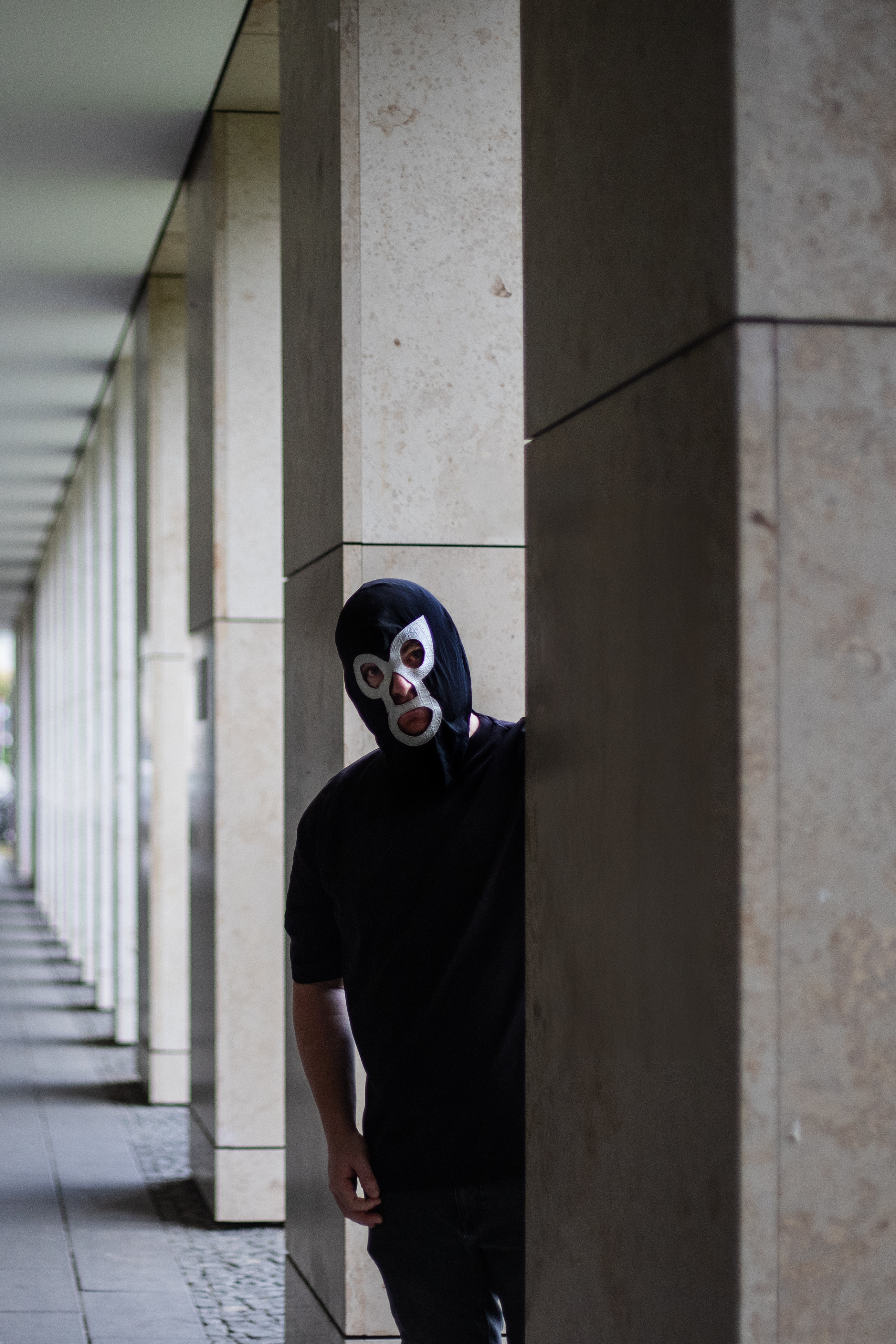
We enjoyed hiding behind our masks and keeping our identities secret for a few years. “Let the music speak for itself and take center stage” was our idea, just like that of some of our fellow masked comrades. Of course, wearing masks on stage also draws attention in its own way.
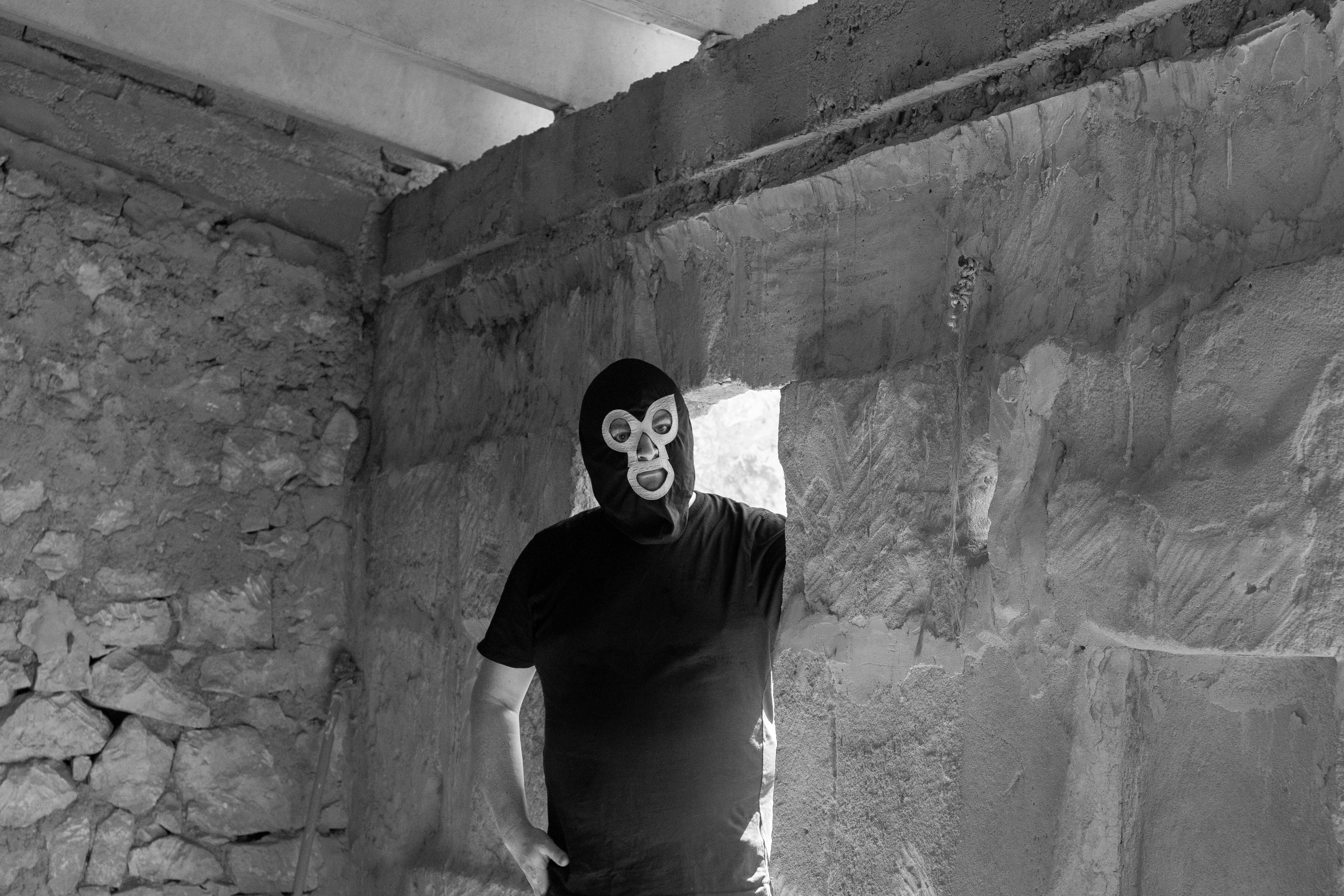
When I started my solo project Snuffo, it made sense to keep the mask, even though I no longer perform anonymously. My mask is a nice visual element of the live shows, but more importantly, wearing it helps me focus on my set and deal with stage fright and other anxieties that can come with performing live.
With „Poetic Gaze“, anonymity wasn’t really a factor, I’d say, especially since I mention my real name in the album credits.

7. You also work as Snuff Crew and Cellarkalt, and you write prose and poetry under your real name. How do these different outlets feed into each other, and did poetry influence this album?
For many years, I kept my different art forms separate. I wrote prose and poetry and gave readings, made club music and performed live, created abstract soundscapes and performed those, too.
Today, it all feels connected. I see myself as an interdisciplinary artist, working across different forms of expression. I also create video installations, and all these art forms inspire and feed into one another.
Of course, there are still phases when I focus more on music, and others when I spend my days working on novels or poems.
While recording „Poetic Gaze“, I also was completing my long poem „Washington Square Park“, which has just been published as a book by the German publishing house anderort.
Maybe the rhythms and tones of my poetry found their way into the tracks on the album, too. And the title Poetic Gaze certainly has a connection to my work as a poet.
IV. In the Margins (The Label)
8. You run Snuffo, Snuff Trax and In The Dark Again. What does it mean for you to release this record on your own label, and how does running labels shape your view of the music industry? The release notes suggest creativity flourishes “in the margins”: does independence give you that space?
When I started my label, Snuffo, the first releases were reissues of the two EPs I had originally released on Freddy Fresh’s Analog Records, which were only available on Bandcamp. At some point, I started to like the idea of sending out fewer demos and taking care of my Snuffo releases myself. So I brought out my EPs „Otherness“ and „Sunshine For A Depressed Mind“ on Snuffo, too.
When I recorded my album „Embrace The Arts“, I knew I didn’t want to look for a label to release it. I wanted to put it out myself. The same went for „Poetic Gaze“.
Over the years, I’ve released music of my projects on so many great labels, both small and big, and it’s been a wonderful experience. But now, at least when it comes to my Snuffo productions, I want to remain independent. It feels good to have full control over what I do.
That said, there’s still a Snuffo EP coming out on a US label next year. 🙂
With my other labels, Snuff Trax and In The Dark Again, I’ve always enjoyed the DIY aspect, too. I’m not a businessman. I’ve made plenty of mistakes along the way, and much of what I do is based on trial and error.
My main goal has always been to release music I love by talented artists whose work I believe in. I simply follow my intuition. Honestly, I’ve never been particularly interested in the music industry itself.
Running a small label isn’t easy these days, even if you only press 100 copies of each release. Still, I’m happy about everyone who discovers a record on one of my outlets. And I’m grateful to all the amazing artists whose music I’ve had the chance to release, as well as for all the great feedback their records have received.
Unfortunately, I also have some sad news for everyone who follows Snuff Trax and In The Dark Again: both labels will be coming to an end in the near future. In The Dark Again will close after its next release, DARK15, and Snuff Trax after STX27.
I feel I’ve told the stories I wanted to tell with these labels, and now I want to focus on my own releases.
V. Looking Again
9. The release notes say the term “Poetic Gaze” emerged almost naturally. Do you remember the moment it appeared, and how did it guide the writing of the ten tracks?
The term suddenly popped into my mind while I’d already been working on the album for a while. It was a kind of eureka moment. I immediately thought: This is what I want to express with this album.
The term made perfect sense to me. At the time, I was asking myself: How can we resist the speed, disposability, and growing superficiality of our time? How can we create space for stillness amid the constant noise of a restless society driven by algorithms and performance pressure?
And I found my answer in the poetic gaze. As the album’s PR text puts it, it’s a way of seeing that pierces through the artificial and uncovers hidden dimensions of beauty and meaning. It reshapes how we perceive the world around us, both near and far, revealing unexpected connections and opening up new interpretations and possibilities. At the same time, it turns both outward and inward, inviting us to linger a little longer and reflect on our existence and the fragile wonder of being alive.
The poetic gaze can draw us away from our screens, heighten our awareness of the physical world, and encourage us to question familiar notions of beauty. It reminds us that beneath every surface, there are countless unseen dimensions waiting to be discovered.
Sounds pretty deep, or maybe just terribly pretentious. But that’s how I see it.
Following the ideas behind my previous album, “Embrace The Arts”, this felt like a natural next step, both in terms of the conceptual framework and, more simply, the story I wanted to tell. Once I had the album title, it became much easier to continue the recording process.
10. The cover shows a detail from Ricarda Giefer’s painting Next Idea against Toxic Masculinity. How did you find the work, and why does it fit this album?
My dear friend Tobias Fuchs, a great writer from Cologne, suggested a collaboration with Ricarda Giefer. I immediately liked the idea, as I’ve already been drawn to her work as a painter.
So I sent Ricarda my album, which was about 70 – 80% finished at the time, and we met to talk about the title Poetic Gaze. A few days later, she sent me four details from her acrylic paintings to choose from.
What they all had in common was a certain ambiguity that connected beautifully with the album title. Both the people depicted in the paintings and the viewer can be seen as having a poetic gaze.
In the end, I was drawn to the work titled „Next Idea Against Toxic Masculinity“. First of all, the painting itself felt like a perfect match for the sonic landscape and the message of my album. And secondly, I’m deeply disgusted by the toxic masculinity that is so prevalent in our society. So the choice felt meaningful to me on a personal level, too.
11. Your previous album, Embrace The Arts (2025), started this shift in your trajectory. What did you learn from it that you carried into Poetic Gaze?
I was really happy with how well „Embrace The Arts“ was received worldwide, and that so many people understood the idea behind it and were open to such a diverse range of sounds. It taught me that I can take more risks musically, broaden my horizons, and explore even more experimental textures alongside the club tracks I still love to produce.
First and foremost, I make music for myself, driven by a deep inner urge to express myself. But of course, I also want my music to be heard and played by others.
12. Is there a track on the album, such as “Merrimack River” or “Subway Jazz”, with a particular story, and which one would you point a new listener to first?
I recommend starting with the opening track, “Unlearn,” and listening all the way through to the final track, “Perpetual Remembrance.” 🙂
Thank you, Benedikt, for your time and for the thoughtful answers. Poetic Gaze is out on November 6th, 2026 via Snuffo, distributed by Paradise Entertainment. Is there anything you’d like to add, whether about the album, upcoming shows or what you’re exploring next?
I’d like to add that I’d love to play live more often again. These are challenging times, especially for underground live acts, and I’m well aware of the economic pressures promoters are facing. Still, I wish there were a little more imagination and courage when it comes to booking and programming. Dear promoters: I’m available for gigs in 2027. 🙂
Label: Snuffo
Artist: Snuffo
Title: Poetic Gaze
Format: Digital Album
Catalogue: SN06
Genre: Techno, House, Electro, Experimental, Leftfield
Distribution: Paradise Entertainment
Domain Label: snuffo.bandcamp.com
Release Date: November 6, 2026
Support & Buy: snuffo.bandcamp.com/album/poetic-gaze
Tracklist
1. Unlearn
2. Intangible
3. Merrimack River
4. For a Better Tomorrow
5. Realms of Bliss
6. Subway Jazz
7. Fantasmas
8. Transient Souls
9. Momentum
10. Perpetual Remembrance
Credits
All tracks written and produced by Benedikt Schmidt
Mastering by Emanuel Geller (Salz Mastering)
Artwork by Ricarda Giefer
Layout by Stefan Gubatz
Snuffo
SoundCloud | Instagram | Bandcamp | Linktree
Club Furies
Website | SoundCloud | Instagram | Threads | TikTok | Facebook | Bandcamp | Linktree


Deja una respuesta