INTRO
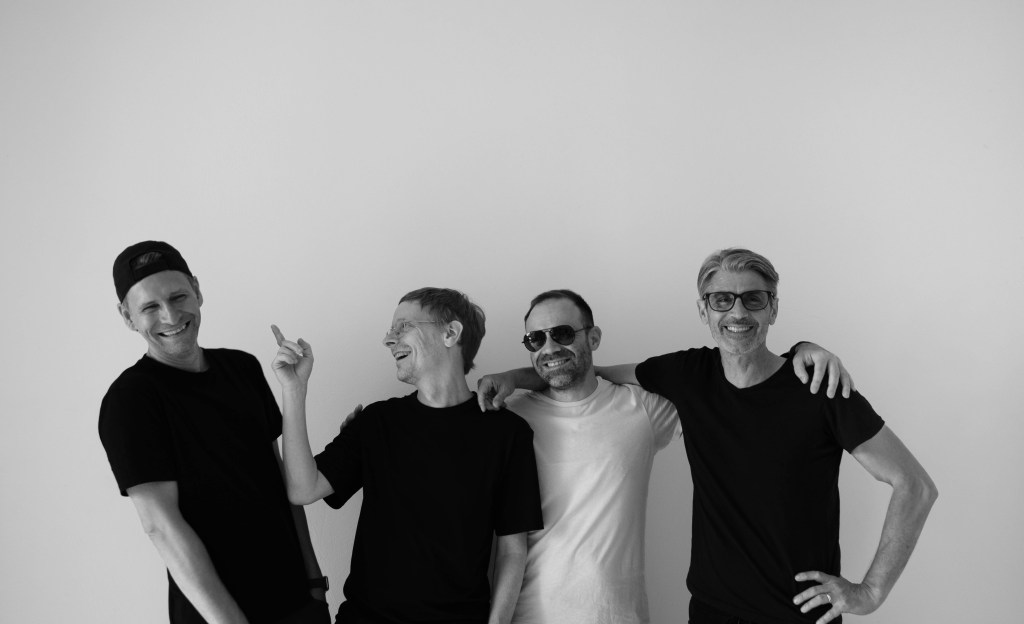
Fourteen years of silence end this September. Sender Berlin returns with MazanA, a four-track EP built in collaboration with _studio416, the studio collective formed by Sven Elmlund and Hendrik Vaak. The record grew out of long nights in Marzahn, far from Berlin’s usual circuits, where concrete housing blocks and quiet streets became the backdrop for four new productions. We spoke with both projects about the comeback, the studio that shaped the sound, and what remains of Sender Berlin’s identity after all these years.
SENDER BERLIN
1. Fourteen years passed since your last record. What made this the right
moment to return?
Hendrik: The timing was actually a coincidence — even though the idea of doing something new with Sender Berlin had been there for a long time. Over the last 2–3 years, more and more situations just naturally came up where we (Sender Berlin) started meeting up more often, usually at _studio416 in the studio. So when the surprising request from Snork Enterprises came in, asking whether we’d feel like doing something again, we didn’t have to think long — we just got started.
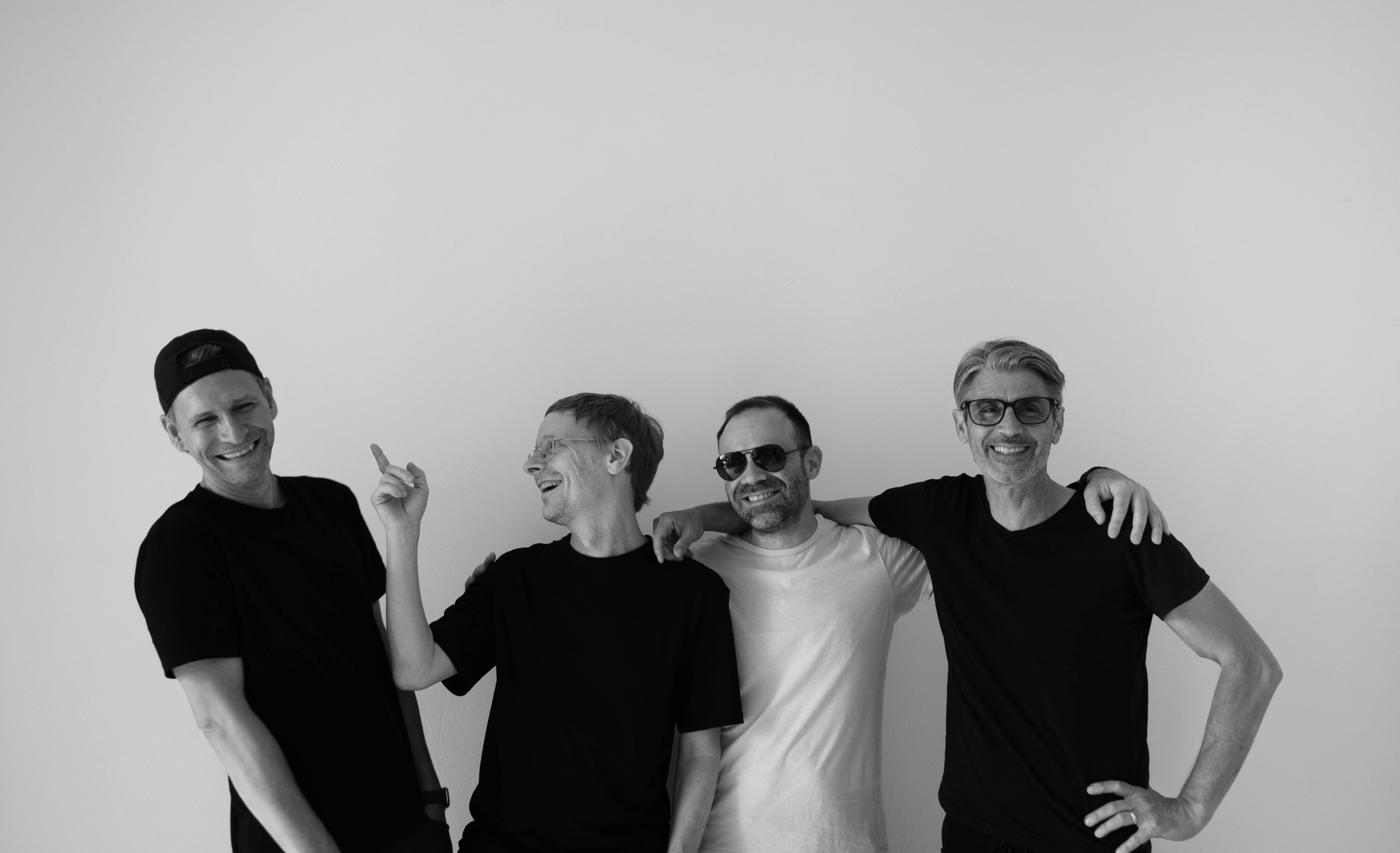
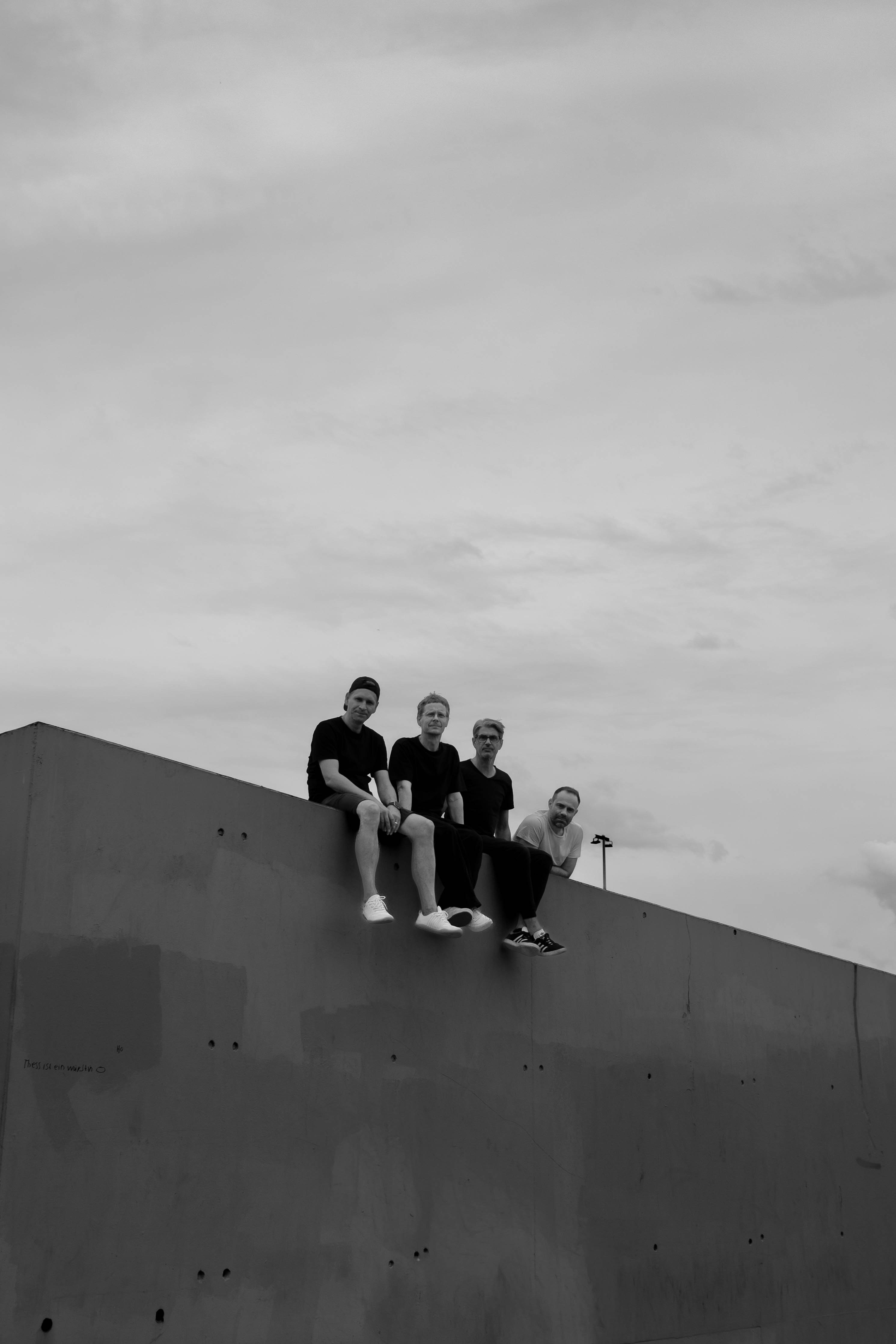
This photo and all the photos in this article are by Julia Piesiak.
2. Sven Elmlund joined the project in 2024. How did his arrival shift the
internal dynamic of the group?
Sven: Since Hendrik and I founded the _studio416 project and built a music studio together, we’ve already been making music together for quite a while. Hendrik is a co-founder of the Sender Berlin project, and through that connection we ended up working on and finalizing tracks from the Sender Berlin project as well. In doing so, I also had an influence on the sound, and we were able to weave a few _studio416 elements into the tracks. On the track “The Morning” in particular, that’s very easy to hear and feel. It’s not a typical Sender Berlin track and reflects the influences of _studio416 and Sender Berlin best of all.
It feels good, and I’m really happy to have become an active part of the Sender Berlin family. I think that through our collaboration we’ve managed to carry new and fresh Sender Berlin music into the ears of the world.
Hendrik: We’ve all been friends for almost our entire lives. I’ve known Sven since my school days. Sven E. was already part of the Sender gang more than 20 years ago — just not actively, as someone bringing in musical ideas. He wasn’t ready for that back then. Sven and I (Hendrik Vaak) run our _studio416 project and produce one track after another there; by now we’re a producer team. When the work on MazanA began, at some point I just said: “Svenne, well, now you’re Sender Berlin too.” It’s only logical, since we’d been working on the tracks together anyway. Without Sven E., this release simply wouldn’t exist.
3. “Spektrum Weltweit” and “Gestern Heute Morgen” came out on Tresor.
What does it mean to return now with Snork Enterprises?
Hendrik: Alongside Tresor Records, Snork Enterprises was always our biggest supporter and motivator. Christian Schachter (the person behind Snork) is simply a wonderful human being. Sender Berlin played at many Snork parties in the past, and over the years that grew into a real friendship. Even when things went quieter on the Tresor side, Christian and Snork kept supporting us. That’s why Sender Berlin’s last record also came out on Snork Enterprises (Snork 60 / Deep Field Transmission), and it’s why MazanA is coming out on Snork Enterprises too.
4. Sender Berlin never committed to a single style. How do you understand the sonic identity of the project today, after all these years?
Hendrik: Personally, I still understand it exactly the way I did in the early years. At its core, Sender Berlin is an open music collective. The output always depended on which people, situations and experiences provided the input. Sender Berlin never wanted to be a pure techno thing — there’s simply too much amazing musical diversity out there for that. I think the only thing that will always remain the foundation is that it’s electronic music.
_STUDIO416
1. How would you describe _studio416’s identity in relation to Sender Berlin’s?
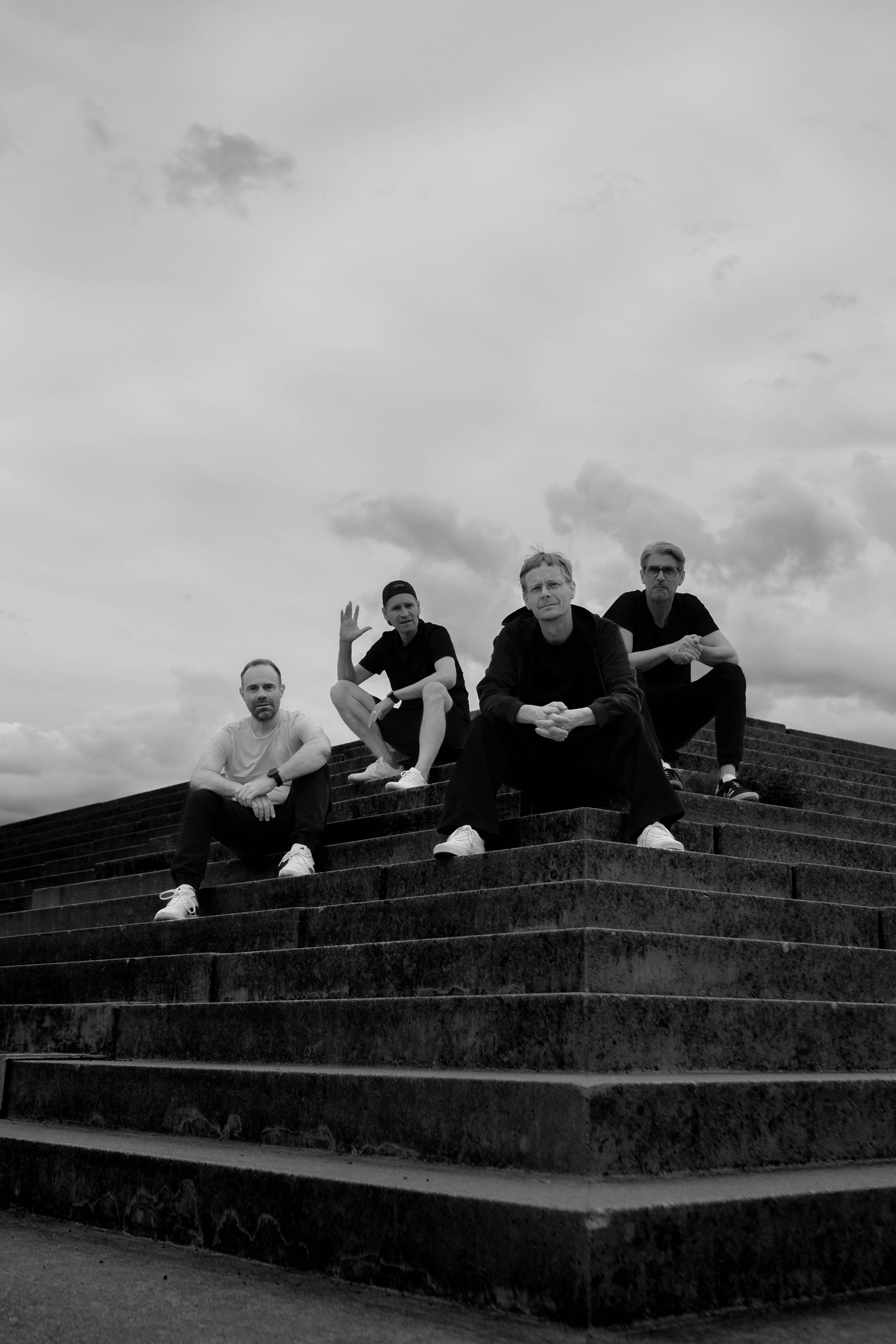
Sven: _studio416 is unpredictable — sometimes even for us. When we produce music, there’s no roadmap at first; we let ourselves drift and go with our gut. Things like: “make the beat faster,” or “how about some guitar?” or “push this here, mute that there,” or one of us just grabs the microphone first. Only after that first creative phase does the direction slowly start to crystallize.
It might then head in a hip-hop direction, or get more experimental and slower with broken beats and spherical sounds, or we crank the tempo up to 140 or 150 bpm — anything is possible. Techno is never the focus; if it happens, it happens.
Hendrik: With MazanA, _studio416 was the driving force. As mentioned, the other Sender boys (Luke and Stassy) would drop by the studio now and then. We’d listen to a lot of music and chat about the old days. Then, all of a sudden, fragments of _studio416 productions would come on that were surprisingly more techno than our typical _studio416 stuff, which is often calmer and features vocals. Those fragments were probably always subconsciously meant for something else — we (_studio416) just couldn’t do anything with them, because they didn’t fit what we were otherwise working on at the time. Then the request from Snork came and we actually wanted to say no, because we didn’t have any truly brand-new Sender Berlin music. But someone from the gang pointed out that there were those fragments we’d been listening to. Suddenly everything made sense, and _studio416 transformed the fragments into MazanA.
2. Marzahn sits far from Berlin’s noise. What did you find there that you
wouldn’t have found anywhere else in the city?
Hendrik: Well, Marzahn isn’t really that far away 🙂 But far enough to tinker with music in peace and undisturbed. When I step into the studio, in a way I always step into another world. My focus is then 100% on the music — something I just can’t do out there in the everyday world.
3. Hendrik mentioned the apartment lights turning on and off in time with the music. Did that image shape any production decision directly?
Hendrik: It was simply always the backdrop you’d see whenever you looked out of the window. Even when we took a break and no music was playing at all, you were always aware of the building. Subconsciously that surely does something to you, but I can’t say exactly what. At a certain point in the production, though, it became clear that we wanted to involve the building somehow. That’s where the idea for the visualizer came from — which we also made ourselves.
4. An entire building of windows, each with its own story. How does that idea
of watching other people’s lives translate into the sound texture of MazanA?
Hendrik: Honestly, you can’t really see what’s happening behind the windows. Even when we shot the footage for the visualizer and zoomed in really close, you could never actually make anything out. I also think it would be a bit intrusive — and not our style — to watch people without asking just to draw inspiration from it. Everything was blurry, out of focus, glinting, or forever dark. That’s the beautiful and mysterious thing about the building: you never really saw what was going on behind the windows. Sometimes silhouettes would appear, outlines of objects, hints made of light. So it all plays out more in your head — what could be behind that purple window… and from that a story emerges that has nothing to do with reality. And yes, maybe that did unconsciously influence the sound structure of MazanA.
Sven: What fascinates me is seeing how so many people in one place, like a high-rise, live past one another so anonymously. I know that feeling, because I live in a building like that myself. Yes, behind every window a story of its own is hidden, and all those windows together are what make up the building — diverse and just as unique. And from my point of view, the sound texture of MazanA is exactly that diverse: warm, spherical sounds or brutally hard sawtooth sounds, a pounding 4/4 techno kick drum or a broken beat — and then there’s Maria’s fantastic voice. All of that together turned MazanA into a musical mirror image of a high-rise like that.
SENDER BERLIN × _STUDIO416
1. How did the idea of creating MazanA as a joint project between both of you come about?
Hendrik: As mentioned above, it was a natural process. Sender Berlin hadn’t made its own music for a long time. But because we kept meeting up with the other Sender boys in the studio, the fire simply reignited on its own. In a way, Hendrik is the link between Sender Berlin and _studio416, so it was just logical to do something with Sender Berlin again. And with their unused techno fragments, _studio416 already had a solid foundation to build on. Then the request from Snork Enterprises came in, and all at once everything made sense. _studio416 then transformed the fragments into MazanA.
2. The four tracks cover different ground, from dub techno to the spherical
melodies of “Noiser” and Maria Pietranera’s vocals on “The Morning.” How
did you decide on the EP’s sequencing and arc?
Hendrik: Of course we wanted Sender Berlin to sound like Sender Berlin again. For that it was important not to just line up four techno tracks, but to pick up on many different facets of electronic music, including vocals. That was and still is a defining trait of a Sender Berlin release. At the start we didn’t think about the arc or sequencing at all — that emerged during production. Once the tracks were basically finished, we listened to them a lot in different settings — each of us on our own, but also together in the studio. That’s how the running order eventually crystallized. Nice that you noticed.
3. MazanA marks the beginning of a new chapter for Sender Berlin. What part of that historical identity did you choose to keep, and what did you choose to leave behind?
Hendrik: That’s true — a new chapter really has begun, and we’ve set ourselves quite a lot. MazanA is only meant to be the start; we’re already working on a new, even bigger thing, but it’s too early to talk about that. Because of the long break we’ve all changed, of course — personally, but also in our musical tastes… just so many things. But we don’t actually want to deliberately leave anything behind. And all the new experiences in our lives naturally flow into future music. Sender Berlin has a unique story, and now it’s about continuing to tell it.
CONCLUSION
MazanA drops digitally on September 4 through Snork Enterprises, with a vinyl edition and remixes from Truncate, Nerk, Syntax Error, and Lyoma already on the horizon. The conversation makes one thing clear: this return carries no nostalgia. Sender Berlin steps back into the room with a new studio, a new collaborator, and a sound still willing to move.
Artist: _studio416 x Sender Berlin
Title: MazanA
Label: Snork Enterprises
Catalogue: Snork131
Format: Digital · Vinyl to follow
Release Date: September 4, 2026
Support & Buy: Bandcamp
Tracklist
1. MazanA — Produced by Hendrik Vaak, Sven Elmlund
2. Concrete Rush — Produced by Hendrik Vaak, Sven Elmlund, Tomek Piesiak
3. Noiser — Produced by Sven Elmlund, Hendrik Vaak
4. The Morning — Produced by Sven Elmlund, Hendrik Vaak; Vocals: Maria Pietranera
Sender Berlin
SoundCloud | Instagram | Facebook | YouTube
_studio416
Instagram | YouTube | Facebook | Bandcamp
Snork Enterprises
SoundCloud | Instagram | Threads | TikTok | Facebook | Bandcamp
Club Furies
Website | SoundCloud | Instagram | Threads | TikTok | Facebook | Bandcamp | Linktree
 Club Furies
Deja un comentario