Take a three-beat loop and lay it across a steady pulse. For a while the two agree. Then they drift: the loop slips out of phase, a longer doira pattern takes several bars to come back around, and somewhere in the blur everything snaps into alignment again. That is how 2330 is built, five club tracks made of overlapping rhythmic cycles that repeat long enough to dissolve and then lock together once more. It is also, not by accident, a fair description of its author’s life: out of phase with the labels placed over him, and returning, stubbornly, to himself.
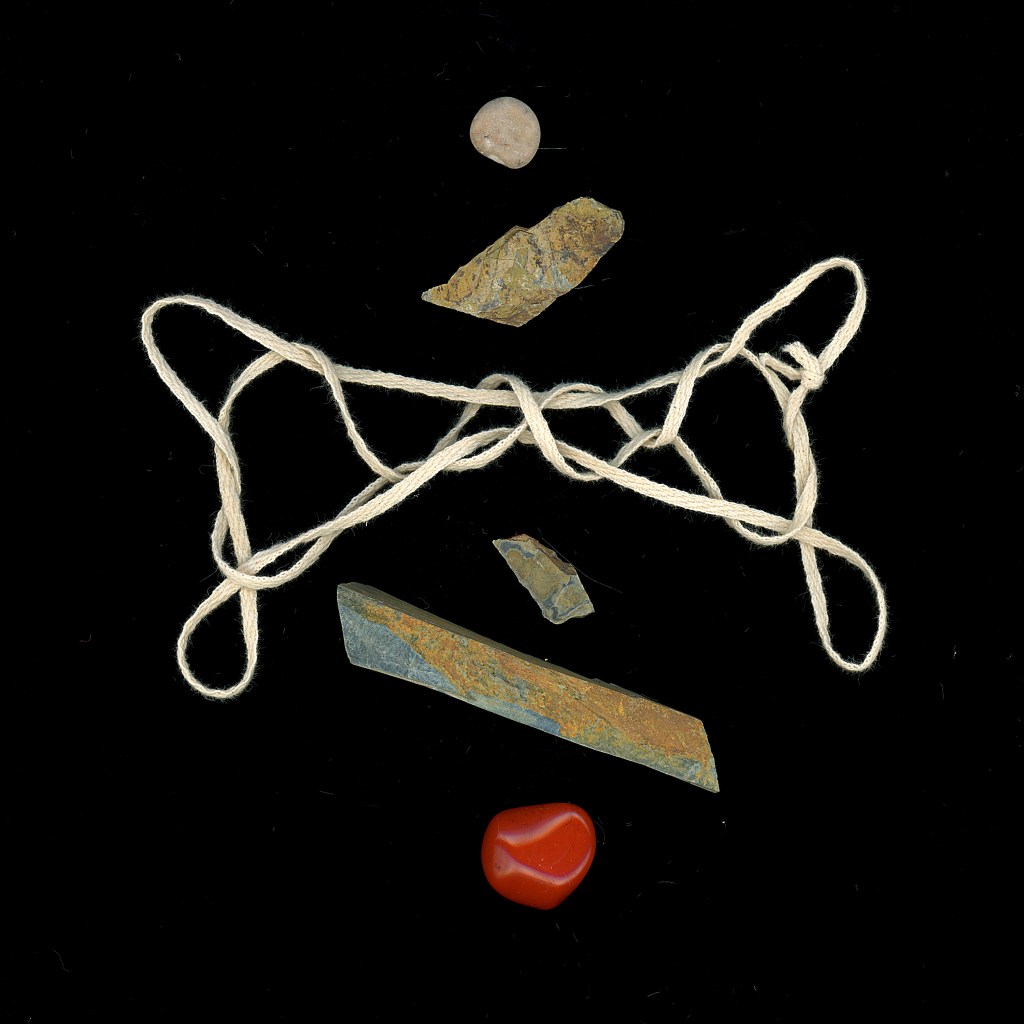
That author is Viner, a musician, DJ and producer living between Marseille and Barcelona. His EP arrives on November 18, 2026 on PATAR, with mastering by A.Fruit and cover art by Naila Golman, and it is a physical record of pressure. Bass arrives in blunt, distorted blocks, and by the final track the restraint that holds the earlier pieces together starts to vanish. The raw material comes from field and live recordings Viner made in Central Asia in 2022: voices and instruments cut into pieces, stretched, distorted and folded into the percussion. The record owes something to the obsessive editing and repetition of Muslimgauze, to the weight and broken rhythm of UK rave and The Prodigy’s The Fat of the Land, to RP Boo’s stripped-back footwork, to Slikback’s bass pressure and to Abadir’s polyrhythmic percussion.
The reason behind this rhythmic ambition is written into Viner’s biography. He was born in Ulyanovsk, in the Soviet Union. Before his birth, his family lived in Patar, Tajikistan, where his brother and sister were born, a name that the label that releases this EP shares. His father is Uzbek and Mishar Tatar, his mother Bashkir and Tatar. His parents spoke Tatar, Bashkir, Uzbek and Tajik, but raised their children in Russian, fearing that an accent would make them a target.

The text that accompanies the EP is direct about why that fear was not unfounded. Russia officially describes itself as multinational, but not everyone is allowed to belong in the same way. If you look and talk “Russian,” you belong. If you don’t, in the best-case scenario, you are asked where you are really from. Officials label people who happen to speak the language “Russians” and “compatriots,” in order to assert a claim over neighboring countries. In Europe, the reduction is even simpler: his family history, cultural heritage and language go in the trash, and he wakes up a “Russian” again.
With his artistic approach, Viner takes back what’s his. He draws on the musical memory of Central Asia and the Volga-Ural region, cultures so rarely allowed to define their own relationship with contemporary electronic music, with their musical traditions drowning in generalizing labels, from “post-Soviet” to “ethnic” or “world music.” His main goal is to reach beyond labels, cultural and political, that narrow not only the abstract meaning of the music but also its practical paths, and those of the artists behind it. 2330 is a point on a road not yet finished, but its intention is clear: to reclaim the author’s right to be perceived beyond the labels, to take a personal stand and put the art in the spotlight, offering it as a starting point for any conversation instead of many possible preconceived notions.
Here is how we heard the five cycles.
1. Viner – 1233. A breathless start that reaches its climax almost at once. After it, rock and psychedelic tints bring a kind of calming stridency, and also a rotor that channels the rhythm. Then the synthesis of the texture arrives: enveloping movements, electric and slightly metallic, that deepen the immersion. They provoke introspection but also very strong perceptions at the same time, so that the internal and the external play out intensely and simultaneously.
2. Viner – 1619. The psychedelia grows even more, this time stalking but subtle and delicate. The climax again comes early, and paradoxically it announces that the chase is intensifying. What follows is a lovely sonic dance, or battle, that unfolds among rugged mountains and perennial valleys and lakes. This is the moment when body, perception and sound become one in a ritual as intense as it is wonderful, culminating in an ethereal delirium.
3. Viner – 1629. This is the track we had the pleasure of premiering at Club Furies. By now the sound has shed its dense, heavy moorings and dressed itself in delicate extremes, with sonic chains that are fine and bright at the start and rise into the tribal echoes that won us over. After two and a half tracks, the vocals arrive, not only to surprise the listener but to complicate and refresh the texture built so far. A few moments later the synthesis returns: between voices and harmony, the desert savannas turn into jungle plains, and far off on the horizon we meet frozen tundras.
4. Viner – 1516. The intensity matches that of the previous tracks, but once again on other sonic rails that add complexity and sophistication. The climax arrives, this time amid impregnable emergencies that announce the next stage more explicitly, and alarms warning us of something. That something is not very clear, but the beating of the heart has found an echo in the sound, a marvelous effect that shows the quality of Viner’s sound. The final synthesis is overwhelming and perfect at once.
5. Viner – 1317. The close could not have been any other way, nor any more phenomenal. A constant, perennial, emerging intensity, played out in very subtle, thin notes that sound like fine, tinkling threads, yet strike like hammers and sweep the floor like a bulldozer. It is where the restraint of the earlier pieces finally gives way.
There is no doubt that Viner has delivered an extraordinary release, full of complexity in each of its rhythms, which can be heard in every track, yet unified as a whole. It is an excellent sonic art form built on the unity of difference. Like the cycles that drift apart and lock together again, 2330 shows that something can be many things at once and still be entirely itself.
Artist: Viner
Title: 2330
Label: PATAR
Catalogue:
Mastering A.Fruit
Cover Naila Golman
Release Date: November 18, 2026
Support & Buy: Bandcamp
Tracklist
1. Viner – 1233
2. Viner – 1619
3. Viner – 1629
4. Viner – 1516
5. Viner – 1317
Viner
SoundCloud | Instagram | Bandcamp
PATAR
SoundCloud | Instagram | Bandcamp
Club Furies
Website | SoundCloud | Instagram | Threads | TikTok | Facebook | Bandcamp | Linktree


Deja una respuesta